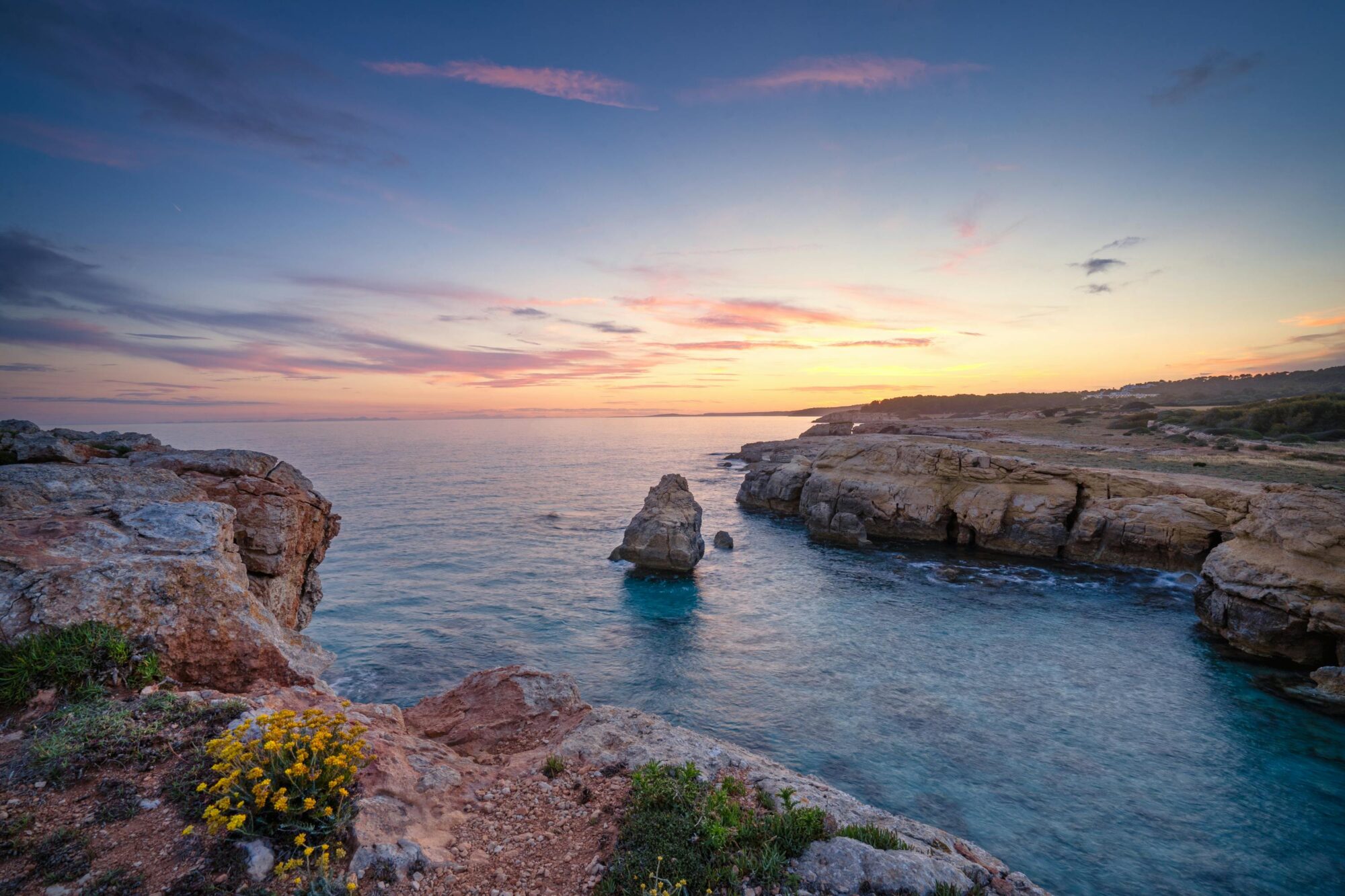
quiet beaches in Spain: Start with the practical answer, then verify time-sensitive details with the official source.
Quiet Beaches In Spain
For a practical quiet beaches in Spain plan, use the current facts above as context, then confirm dates, access, prices or rules with the official source before booking.
Quiet beaches in Spain are found by managing timing and access, not by following a list that promises secrecy. A protected island requiring authorization, a cove reached by a steep path and an urban beach outside peak hours create very different trips. Start with transport, walking difficulty, facilities and sea conditions, then decide how much isolation is actually safe.
This guide deliberately uses a shorter shortlist. Road restrictions, permits, buses, lifeguard cover and parking change by season, so every time-sensitive detail needs a final check with the responsible authority.
Planning answer: choose by access type
| Access type | Advantage | Main risk | Primary check |
|---|---|---|---|
| Protected island by ferry | Controlled access and no private-car arrival | Authorization and ferry availability must align | Park authorization portal and ferry operator |
| Road plus steep footpath | Access friction can reduce casual crowds | Heat, loose ground and difficult return climb | Municipal or tourism access notice |
| Seasonal beach bus | No parking search | Last bus and route season | Official transport timetable |
| Remote unserviced cove | Lower development | No shade, water, lifeguard or easy rescue | Weather, sea state and emergency access |
Cíes Islands: plan the authorization and ferry together
For the Cíes Islands, use the official authorization portal and the national-park visitor guidance. An authorization without suitable transport is not a complete plan, and a ferry search should not be treated as proof that park entry is available.
Figueiras and other island beaches remain protected natural places, not guaranteed empty coves. Carry water and sun protection, stay on marked routes and follow all conservation instructions.
Playa del Silencio: walking access matters
Asturias’ official tourism page is the starting source for Playa del Silencio. The viewpoint and descent should be considered separately: a traveller comfortable at the overlook may not be comfortable on a steep or uneven approach. Check recent local access notices and avoid adding an unsupported parking fee or walking time to the plan.
Menorca coves: use the current bus network
For Menorca, seasonal access controls and beach buses can make a car-free day easier, but routes are not timeless. Check Menorca’s official transport site for the exact date and return service. Macarella, Macarelleta and other well-known coves should not be described as unknown; use an early or late visit and an alternative beach rather than promising solitude.
Canary Islands: remoteness changes the safety plan
Benijo and Güigüi illustrate two different problems. A viewpoint or road-access beach can still have strong water conditions, while a remote walk demands enough water, navigation, heat judgment and turnaround time. Use the island authority’s current trail and weather information. Do not undertake a remote coastal path merely because an image suggests easy access.
A practical beach-selection plan
- Check the tide, swell, wind and heat for the intended hours.
- Confirm legal access, permits and any protected-area capacity process.
- Verify the final bus, ferry or parking arrangement.
- Read the walking route in both directions, including the return climb.
- Identify shade, drinking water, toilets and lifeguard coverage without assuming they exist.
- Keep a staffed, easier-access alternative for unsafe sea or trail conditions.
Flags, jellyfish and medical advice
Follow beach flags, lifeguards, emergency services and current regional health guidance. Jellyfish species and treatment guidance vary; a generic travel article should not replace local medical advice. If there is no lifeguard, reduce exposure rather than treating the absence as part of the appeal.
Low-impact behaviour
- Stay on marked paths and out of dunes, nesting areas and private fields.
- Carry waste out and avoid speakers in quiet natural areas.
- Do not geotag sensitive access points when authorities request otherwise.
- Use established toilets and never contaminate freshwater or coastal habitats.
- Photograph people only with consent and keep drones away unless the exact airspace and protected-area rules permit the flight.
Access sources checked 15 August 2026. Recheck transport, permits, sea conditions and local restrictions for the exact travel date.
Quiet does not mean risk-free
A remote or protected beach may have no shade, water, lifeguard or simple rescue access. Check swell, tide, heat and the return route before entering the water. Follow local flags and emergency advice, and never treat an old blog’s medical tip as a substitute for professional guidance.
Respect capacity controls, public paths, dunes, private fields and local residents. A quieter day should reduce pressure on the place rather than move it to an unofficial entrance.
Detailed planning workflow
Start with the reader’s real decision, not a generic list. For quiet beaches in Spain, write down the date, people travelling, mobility or energy limits, budget, arrival point, return deadline and the one experience that matters most. This makes the guide usable for a real booking rather than merely attractive in search results. If one of those inputs is unknown, mark it as an assumption and explain how to verify it.
Next, separate facts into three groups: fixed information, seasonal information and information that must be checked immediately before travel. Fixed information can include a published opening period or an official rule. Seasonal information can include a bus, ferry, trail or event operating window. Last-minute information includes weather, closures, capacity, prices and supplier availability. A reliable plan does not present all three groups with the same confidence.
| Decision | What to confirm | What to do if it changes |
|---|---|---|
| Primary activity | Official date, access and booking rule | Keep a nearby alternative |
| Transport | First, last and disruption-sensitive connection | Save a route that returns to the same base |
| Budget | Currency, date checked and cancellation terms | Keep a contingency rather than overbooking |
| Safety | Weather, physical difficulty and emergency access | Set a turn-back or cancellation decision in advance |
Build a plan with recovery time
Long itineraries fail when every hour is allocated. Leave a buffer after the most demanding day, after any crossing with a queue risk, and before a non-refundable departure. A buffer is not wasted time: it absorbs a late connection, poor weather, fatigue, a crowded attraction or the practical time needed to find food and return safely.
For families, older travellers and mixed-ability groups, plan around the slowest realistic pace. For solo travellers, tell someone the independent route and keep a charged phone, offline information and a clear fallback. The best plan is the one that remains workable when one assumption is wrong.
How to verify each recommendation
- Open the official source linked beside the claim.
- Check that the page applies to the exact date, region and traveller type.
- Record whether the information is fixed, seasonal or live.
- Check the last return option before committing to the activity.
- Save the confirmation or screenshot for offline use.
- Remove any detail that cannot be verified rather than filling the gap with a confident guess.
Third-party guides are useful for discovering options, but they should not be the final authority for a border rule, safety warning, ticket condition, transport schedule or protected-area restriction. When two sources conflict, prefer the current operator or public authority and note the uncertainty.
Common mistakes to avoid
- Using a previous year’s timetable, fare, access rule or event route without a date check.
- Choosing a destination because it looks close on a map without measuring the actual transfer.
- Assuming a reservation guarantees entry when capacity, weather or a permit remains separate.
- Leaving the final return connection with no buffer.
- Carrying too little water, clothing, battery or food for a delay.
- Confusing a recommendation, generated itinerary or product feature with a confirmed service.
Final checklist before publishing or booking
Read the opening answer and confirm that it responds to the query in plain language. Check every number, date and schedule. Open every external link. Confirm that the title, URL, body and search description describe the same promise. Remove unsupported superlatives, invented first-hand experience and generic filler. Then make the booking or departure decision using the current official source, not the date of this article.
This long-form expansion is intended to add decision support, not padding. Conditions, prices, schedules, access restrictions and product capabilities can change; recheck them immediately before travel.
Three realistic reader scenarios
The first-time planner: choose the option with the clearest official instructions, the simplest return route and enough recovery time. Do not optimise for the maximum number of activities. A straightforward plan creates room to learn the local transport, weather and booking rhythm.
The experienced traveller: use the comparison points to take a deliberate risk, not an accidental one. If you choose a remote, exposed or time-sensitive option, write down the exact benefit and the condition that would make you cancel. Experience is useful only when it improves the decision before conditions deteriorate.
The constrained traveller: put mobility, budget, dietary, family or medical requirements in the first paragraph of the plan. Ask suppliers specific questions and keep their replies. A generic accessibility label cannot describe every transfer, surface, stair, toilet or emergency route.
How to make the guide useful after publication
Save the official pages that can change and revisit them before each high season. When a timetable, fee, capacity rule or product feature changes, update the specific paragraph and date rather than rewriting the entire promise. Readers trust a guide that clearly distinguishes what is confirmed from what requires a final check.
Do not add unverified detail merely to make the article longer. A concise warning beside a decision is more useful than a paragraph of generic inspiration. The extra length here is for comparisons, failure modes, examples and verification steps that help a reader act safely.
Last-minute departure checklist
- Reopen the official rule, operator, venue or authority page.
- Check the exact date, local time, currency and location.
- Confirm the first and last transport connection.
- Download tickets, permits, maps and emergency contacts.
- Tell the group what would trigger a cancellation or turn-back.
- Keep one low-risk alternative that returns to the same base.
Long-form does not mean certainty. The article is a decision aid; the current official source controls the final decision.
Decision summary for a busy reader
If time is limited, make the safest high-value choice first: select the option with current official information, a practical return route and a clear fallback. Add complexity only when it solves a specific need. Before payment or departure, recheck the detail most likely to change and tell the group what happens if that detail is no longer available.
That approach keeps the guide useful for both a quick searcher and a careful planner. It also prevents a long article from creating false confidence: more words should mean more decisions explained, not more certainty than the evidence supports.
One final quality check
Read the plan once as a traveller arriving tired, late or in poor weather. Can they find the next action, the official source, the last return option and the fallback without guessing? If not, simplify the route and make the uncertainty visible. A useful long-form guide earns its length by reducing avoidable decisions at the moment they matter.
Keep the article’s working assumptions visible in your notes: travel date, source-check date, transport season and the condition that would make you change plans. That small record makes the guide easier to maintain and gives the traveller a sensible checklist when the final live information is released.
When a detail is uncertain, say so plainly and link the reader to the page that will settle it. That is more useful than a precise-looking estimate that expires without warning.
Authoritative check: Before acting on this guide, review the relevant official travel information for current conditions and requirements.
For related planning, see WeOnTrip travel guides.
Keep the phrase quiet beaches in Spain as the planning question, and recheck the linked source when conditions may have changed.
Pingback:Madeira Without a Car: 7-Day Bus & Hiking Itinerary